Safety isn't a section of our proposal — it's the reason clients in energy, utilities and heavy construction let us onto their sites. Here's how we work and what we can put in front of your procurement team.
Every DATCO employee is responsible for their own safety and for the safety of everyone else in their work area. If a crew member believes the work in front of them is unsafe, they stop and call supervision. No exceptions, no consequences, and no questions about the schedule — a job that has to be done unsafely is a job that waits.
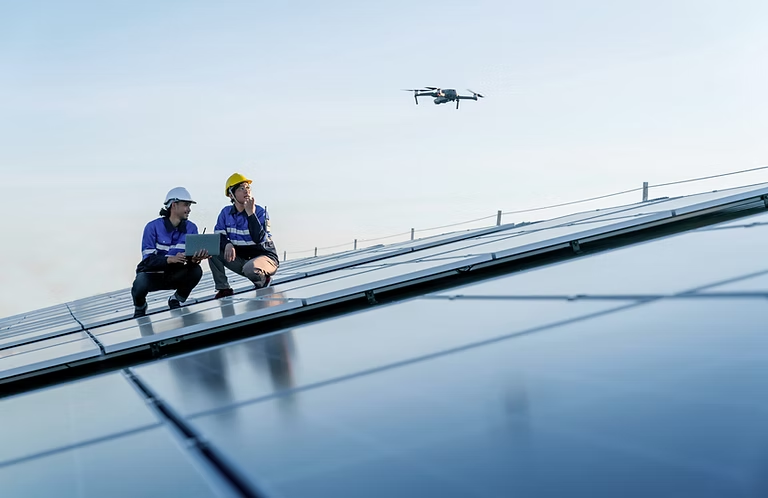
A significant part of why our clients use drones and robotic platforms in the first place is that it takes people out of hazardous environments entirely. Remote inspection means nobody climbs the structure, enters the confined space, or works beside live conductors just to collect data. The safest way to do dangerous work is usually to stop doing it in person.
Every mobilisation starts with a hazard assessment for the specific site and task, and every crew works to the site owner's rules as well as our own. Where your project runs a stricter standard than ours, yours governs.
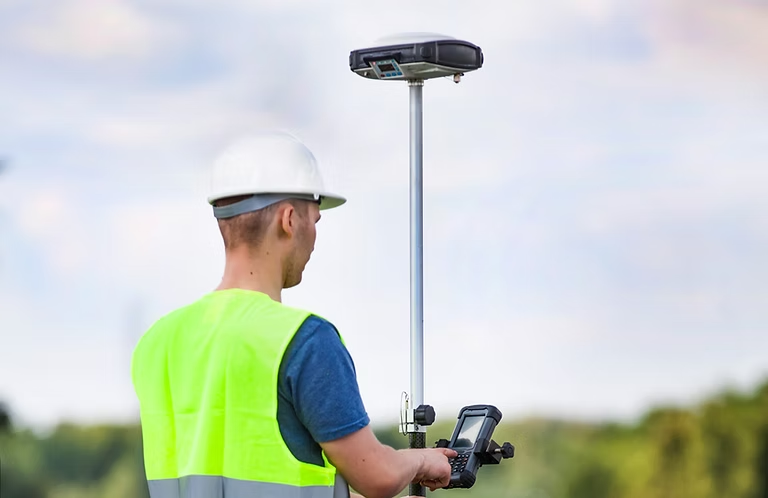
A hazard assessment for the specific site and task before work starts — not a generic form filled in from the truck. Site conditions, access, overhead and buried services, weather limits and exclusion zones, agreed with your supervision.
Wherever a drone, a robotic platform or a remote sensor can do the job, it does. No unnecessary work at height, beside energised equipment, over water or in confined spaces — the technology exists precisely so nobody has to be there.
Anyone on our crew can halt the work, and is expected to. Nothing about a deadline, a client relationship or a mobilisation cost outranks that, and nobody is ever penalised for using it.
Everything below is issued on request, and we're set up to turn prequalification packages around quickly rather than treating them as an interruption.
Our drone operations are conducted under Transport Canada's RPAS rules by certificated pilots flying registered aircraft, with the additional authorizations obtained wherever an operation requires them — including controlled airspace around Halifax.
Engineering work is carried out and sealed under licence with the provincial regulator. Where a project needs a discipline or a licence we don't hold, we say so and bring in someone who does rather than working to the edge of our scope.
We carry commercial general liability, professional liability and aviation coverage appropriate to the work we take on. Certificates of insurance naming your organisation are issued on request.
Coverage in good standing for field personnel, with clearance letters provided directly to your procurement or accounts team whenever they're required.
Crews are trained and current for the work they're assigned, and complete site-specific orientations before mobilising. Training records for the specific crew attending your site can be supplied ahead of the visit.
Vendor management systems, contractor networks and client-specific prequalification forms are all part of normal business here. Send us the requirement and we'll complete it rather than stalling your start date.
Send us your prequalification request and we'll return certificates of insurance, workers' compensation clearance, RPAS documentation and the training records for the crew attending. We do this regularly — it shouldn't be the thing that delays your start date.
If there's a specific document your process needs that isn't listed here, ask. It's usually something we already hold.